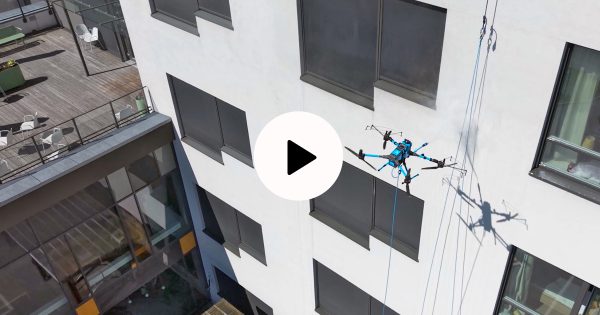
Public authorities in Oslo, the capital of Norway, represented by Oslobygg KF, a major public property organisation, are taking an important step toward safer, more sustainable and technology-driven building maintenance.
Oslobygg KF has entered into a four-year framework agreement for façade and window cleaning with a maximum value of NOK 15 million, with KTV Group selected as supplier. The agreement covers public buildings and represents an important step in the adoption of drone-based cleaning technology within the public sector, with a strong focus on HSE, sustainability and reducing work at height.
For KTV Working Drone, this is far more than a new contract.
It is a clear signal of how public authorities in Norway are beginning to embrace new technology to improve safety, sustainability and efficiency in building maintenance.
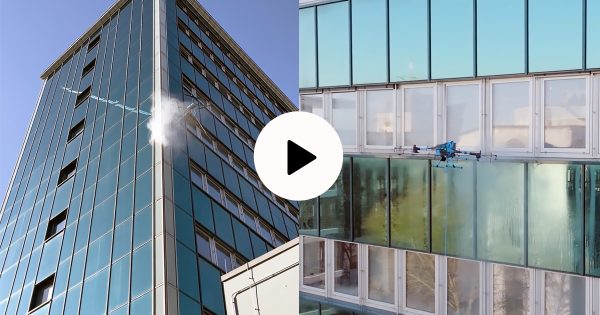
Cleaning and maintenance of façades, roofs and windows has traditionally depended on lifts, scaffolding, BMU systems and people working on ropes. Few building-maintenance activities expose people to work at height as frequently as façade and window cleaning.
At the same time, working at height remains one of the major causes of serious workplace accidents and fatalities internationally. This is exactly where drone and robotic technology can create a major shift.
KTV Working Drone has developed drone-based cleaning technology since 2015. The technology is now present in 67 countries worldwide, and internationally several thousand drones are already being used for building cleaning.
The technology shift is happening very quickly.
What only a few years ago was considered a niche solution is now becoming a real alternative to traditional methods such as lifts, scaffolding, BMU systems and rope access on an increasing number of buildings.
KTV estimates that, on suitable buildings, the technology can reduce the need for traditional work at height by up to 80%.
HSE is one of the key drivers.
The Norwegian public property organisation behind the agreement began testing drone cleaning in 2024. During 2025–2026, the technology was tested in practical operations, with benefits including reduced use of lifts, improved HSE, good accessibility, efficient execution and better documentation.This is important.
New technology must not only be technically interesting. It must solve real problems better than traditional methods.
The objective is to reduce the need for people to work in exposed positions at height while still maintaining quality, efficiency and professional documentation.
Oslobygg deserves recognition for leading the way.
Public-sector organisations are often among the last to adopt new technology. Not necessarily because the willingness is missing, but because regulations, procurement processes, directives and established working methods can make it difficult to introduce new solutions. That is why this development in Norway is particularly important.
Oslobygg, one of the major public property organisations in Oslo, has been willing to test new technology, evaluate the results and open the door to methods that can reduce work at height, improve HSE and sustainability, while still competing commercially with traditional methods. This deserves recognition.
Norway is showing that the public sector does not have to be a brake on new technology. On the contrary, public organisations can lead the way and set a new standard for how HSE, sustainability and technology are combined in practical operations.
When a major public property organisation takes the lead, it also gives confidence to other municipalities, public authorities and large private property owners considering the same technology.
From rope access, lifts and BMU systems to sensor-based and autonomous technology.
The time when people routinely need to work hanging from ropes, lifts or BMU systems to clean façades and windows is, in our view, moving toward an end.
The technology that can move a large part of this work down to ground level already exists.
KTV Working Drone technology combines the drone platform with sensor-based control and autonomous functionality. This helps improve distance control to the building, flight stability, consistency of movement and overall quality of execution. Autonomous flight and sensor technology also add an extra layer of safety by making operations more controlled and repeatable.
The time when people routinely need to work hanging from ropes, lifts or BMU systems to clean façades and windows is, in our view, moving toward an end. The technology already exists, and development is now moving very quickly.
Cleaning and inspection at the same time.
An important advantage of the technology is that the drone can do more than just clean. While façades, roofs and windows are being cleaned, the drone can also be used for inspection and documentation of the building’s condition.
This can help identify:
• façade damage
• cracks and wear
• leaks
• moisture-related issues
• roof damage
• loose or damaged building elements
• areas that should be inspected more closely
The customer therefore receives not only cleaning, but also better documentation and a more up-to-date picture of the building’s technical condition.
This can make it easier to identify maintenance needs earlier and reduce the risk of smaller issues developing into larger and more expensive problems.
Competitive with traditional methods.
Another important point is cost. Drone-based cleaning should not be an expensive technology alternative.
The objective is to deliver at a cost level that is competitive with traditional methods, while at the same time providing additional benefits in HSE, sustainability, accessibility, inspection and documentation.
In the public procurement process, price represented 40% of the evaluation, while execution capability and organisation represented 30%, and environmental factors represented 30%.
This demonstrates something essential:
If new technology is going to replace established working methods at scale, it must work both operationally and commercially.
Norway is moving early and Norway is among the countries moving quickly to test and adopt new technology that can improve HSE, sustainability and efficiency.
The public property organisation behind the agreement manages a substantial portfolio of public buildings in the Norwegian capital. The experience from this agreement can therefore become relevant far beyond the buildings directly covered.
It gives other municipalities, public property managers and private property owners a concrete example of how drone-based maintenance can be tested, documented and implemented professionally. Norway can therefore help establish experience and operating models that may later become relevant internationally.
An important signal to the rest of the world.
The challenge is the same worldwide. Buildings need to be cleaned and maintained. Windows need to be washed. Façades and roofs need to be inspected.
The question is not whether the work needs to be done. The question is how much of this work should still be carried out with people at height when technology can take over an increasing share of the task.
Internationally, the direction is moving toward stronger focus on reducing work at height and using safer methods where this is practically possible.
When public authorities in Norway demonstrate that this can be done in practice, it can have significance far beyond Norway.
For KTV Working Drone, the direction is clear.
• The goal is not simply to make traditional cleaning slightly more efficient.
• The goal is to change how exterior building maintenance is carried out:
• Less work at height.
• Better HSE.
• Lower environmental impact.
• Better documentation and simultaneous building inspection.
• More automation.
• More consistent quality.
• …and a cost level that can compete with traditional methods.
Norway is now showing how this transition can be implemented in practice.